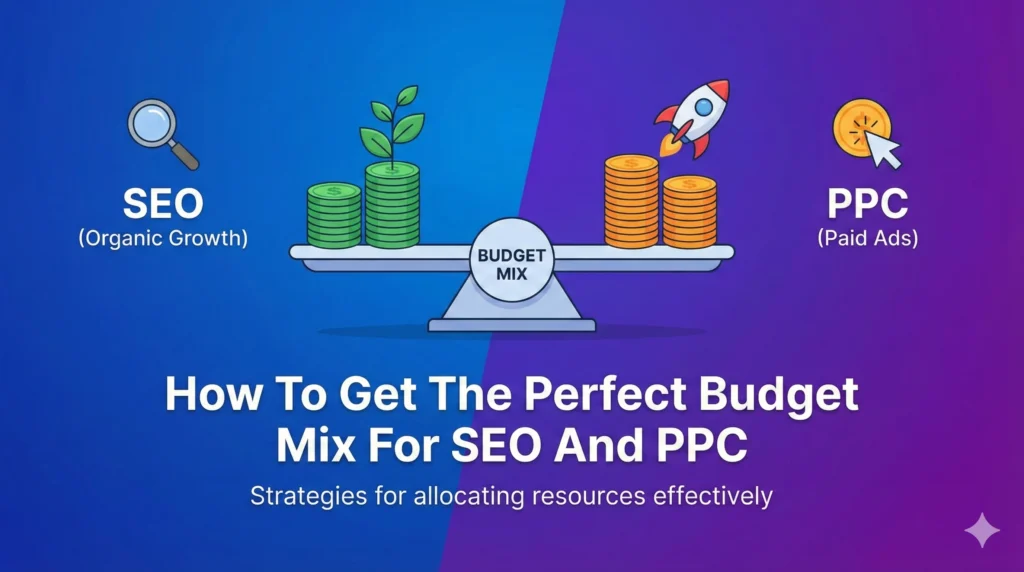
The Search Marketing Dilemma: Finding Equilibrium
In the expansive and often competitive landscape of digital marketing, search remains the primary battleground for customer attention. The twin forces dominating this space are Search Engine Optimization (SEO) and Pay-Per-Click (PPC). While both aim to capture intent-driven traffic from search engines, their methodologies, timelines, and financial models are drastically different. For organizations serious about scalable growth, the central question is not which channel to choose, but how to deploy them effectively together.
Achieving the optimal budget mix between SEO and PPC is one of the most persistent and critical challenges facing marketing leadership today. It is a strategic allocation exercise that moves far beyond simply splitting the marketing budget down the middle. As experts emphasize, arriving at the right balance necessitates a rigorous, data-centric approach rooted in three core disciplines: **clear performance modeling**, **transparent forecasting**, and definitive **alignment** on how each channel contributes meaningfully to the pipeline, impacts Customer Acquisition Cost (CAC), and drives strategic organizational growth.
The perfect blend is rarely static. It is a dynamic ratio that must evolve with the company’s stage of growth, market maturity, competitive pressure, and overall financial health. Understanding the nuanced interplay between these two powerful channels is the first step toward maximizing search marketing Return on Investment (ROI).
Read More: How to Find a Good SEO Consultant
The Fundamental Differences: SEO Versus PPC
Before any dollar is allocated, marketers must fully appreciate the inherent characteristics of organic and paid search.
Understanding the Unique Value of SEO
SEO is fundamentally an investment in digital infrastructure and authority. It is the slow, deliberate process of building credibility, technical efficiency, and content relevance. The returns are long-term, compounding, and highly resilient. Once high rankings are achieved, the traffic gained is essentially “free” (though the initial investment in labor, tools, and content is significant).
- Asset Creation: Every piece of optimized content and every high-quality backlink adds permanent value to the digital property.
- Cost Amortization: While initial costs are high, the cost per acquisition decreases significantly over time as rankings solidify.
- Trust and Authority: Users often place higher trust in organic results, viewing them as authoritative endorsements rather than advertisements.
- Sustainability: SEO provides a baseline of traffic that is less susceptible to competitor bidding wars or sudden changes in platform costs.
Understanding the Unique Value of PPC
PPC, or paid search, is the mechanism for immediate, targeted results. It functions as a precise lever that controls traffic volume and quality on demand. When done correctly, it provides high visibility for immediate sales objectives or targeted lead generation campaigns.
- Speed and Agility: PPC delivers traffic instantly and allows for rapid testing of keywords, messaging, and landing pages.
- Precision Targeting: Paid campaigns can target specific demographics, geographies, and user behavior with granular precision.
- Market Visibility: It is essential for new companies or product launches that lack the domain authority required to rank organically.
- Controlled Spend: The budget is entirely controllable, providing predictable costs per click (CPC) and costs per acquisition (CPA), provided bidding strategies are sound.
Pillar 1: Clear Performance Modeling and ROI Measurement
The foundation of effective budget allocation rests on robust performance modeling. This involves moving beyond vanity metrics (like clicks and impressions) to deeply understand the true economic value generated by each channel.
Key Metrics for Modeling SEO ROI
Modeling SEO performance requires quantifying the economic value of organic activity. Since SEO costs are often hidden (salaries, content creation, tools), accurate CAC calculation is paramount.
- Organic Traffic Value (OTV): This metric answers: “What would we have paid in PPC costs to acquire the traffic we received organically?” This provides a clear, dollar-for-dollar comparison.
- Conversion Rate by Channel: Organic traffic often converts at a different rate than paid traffic. Modeling must account for these conversion differences, especially across different stages of the funnel.
- Time to Conversion (TTC): Organic leads may take longer to nurture than paid leads. Understanding the sales cycle length for each channel is vital for pipeline forecasting.
- Amortized CAC: SEO investment is spread over several years. The modeling must amortize the cost of creating a high-performing piece of content over its expected lifespan (e.g., 3-5 years) to calculate the true, long-term Customer Acquisition Cost.
Key Metrics for Modeling PPC ROI
PPC modeling is generally more straightforward because costs are explicit and immediate. The focus shifts to efficiency and saturation.
- Cost Per Acquisition (CPA) and Return on Ad Spend (ROAS): These are the baseline measures of profitability. Budget increases should only occur when the ROAS remains healthy and the CPA stays below the target threshold.
- Impression Share (IS): This indicates the percentage of available impressions your ads actually captured. If the impression share is low (e.g., 40%), there is a clear opportunity to increase the PPC budget and capture more market share without driving up CPC significantly.
- Search Query Overlap: Monitoring which paid keywords are driving traffic that also ranks organically is crucial. Modeling helps identify opportunities to pull back paid spend on high-ranking organic terms (the “conquesting strategy”) and reallocate those funds to non-ranking, high-intent terms.
Read More: How to find the best AI Consultant for Your Business
Calculating the True Customer Acquisition Cost (CAC)
The final, synthesized metric in performance modeling is the overall CAC. Strategic budget decisions must prioritize lowering this cost while maintaining volume. This involves a weighted average of SEO CAC and PPC CAC. If modeling shows PPC CAC is rising due to platform maturity or competition, and SEO CAC is falling due to increased domain authority, the natural financial decision is to shift capital toward SEO acceleration, using PPC only to cover high-value, high-competition gaps.
Pillar 2: Transparent Forecasting and Scenario Planning
Effective budgeting requires looking forward, not just backward. Transparent forecasting means predicting the outcome of various budget scenarios, ensuring stakeholders understand the potential risks and rewards of allocation shifts.
Modeling the SEO Ramp-Up and Expected Velocity
One of the biggest forecasting hurdles is the lag time inherent in SEO. A budget increase in January will likely not show significant traffic results until June or July. Forecasting models must incorporate this expected “velocity” of SEO success.
- Baseline Data: Forecasts should be grounded in historical organic performance, competitive gap analysis, and estimated ranking difficulty for target keywords.
- Expected Traffic Growth Rate: Use tools and internal data to project what percentage of organic traffic increase is realistic based on the proposed content and technical SEO investment.
- The “Maintenance” Floor: A portion of the SEO budget must always be reserved for technical health and link maintenance, regardless of growth goals. Forecasting must isolate this stable maintenance cost from the variable growth cost.
Utilizing PPC for Data Validation and Gap Filling
PPC is an invaluable tool for transparent forecasting because it allows for rapid, real-time testing of assumptions that will later inform SEO strategy.
- Keyword Validation: PPC campaigns can confirm which high-volume keywords actually convert users. If a keyword is expensive but converts well in paid search, it becomes a high-priority SEO target. If it converts poorly, SEO effort should be minimized.
- Demand Testing: Launching temporary paid campaigns in new geographic or product markets can validate demand before committing substantial long-term SEO resources.
- Filling Search Gaps: Forecasting reveals periods when organic traffic is projected to be insufficient (e.g., during a seasonality dip or immediately following a core algorithm update). PPC funds must be allocated to fill these predictable performance gaps, ensuring consistent pipeline contribution.
The Importance of Sensitivity Analysis
Transparent forecasting must include sensitivity analysis—what happens if things go wrong? Scenarios should address:
- What happens if competition bids up PPC costs by 20%?
- What if SEO content yields only 50% of the projected traffic?
- How quickly can we reallocate funds from one channel to the other if a scenario materializes?
This planning ensures the budget is resilient and agile, avoiding commitment to inflexible annual spending plans that ignore market realities.
Pillar 3: Strategic Alignment and Pipeline Contribution
The budget mix is fundamentally a strategic decision that must align with overarching organizational goals. The metric of success is not channel performance in isolation, but the overall pipeline growth driven by search marketing efforts.
Mapping Channels to the Customer Journey
Different stages of the customer journey (funnel) are best served by different search channels. Strategic alignment means budgeting based on where the company needs the most help in the funnel:
- Top of Funnel (TOFU): Awareness and general inquiry. SEO is crucial here, utilizing informational content (blog posts, guides) to capture initial interest at a low long-term cost.
- Middle of Funnel (MOFU): Consideration and comparison. Both channels play a role. SEO provides authoritative comparison pages, while PPC utilizes competitor bidding and comparison shopping ads to capture immediate consideration.
- Bottom of Funnel (BOFU): Decision and purchase. PPC excels here with highly targeted brand keywords, transactional queries, and Remarketing Lists for Search Ads (RLSA), ensuring high conversion rates when intent is highest.
A company focused on rapid brand awareness may temporarily favor TOFU PPC spend, even if organic channels are strong. Conversely, a mature B2B firm focused on highly qualified leads may budget heavily for MOFU SEO content that nurtures leads over months.
Aligning Budget with Strategic Growth Goals
Budget allocation should directly support organizational strategy:
- Market Expansion: If the goal is rapid expansion into a new geographic market, PPC must receive a significant, temporary boost to capture demand immediately, while SEO builds authority in parallel.
- Product Launch: New product launches often rely almost entirely on PPC in the short term, as there is no organic authority yet built around new brand or product terminology.
- CAC Reduction Mandates: If leadership mandates a reduction in overall CAC, the budget must shift aggressively towards high-leverage SEO projects that reduce reliance on high-cost paid placements.
Crucially, misalignment occurs when channels operate in silos. The perfect budget mix necessitates that SEO and PPC goals are shared. For example, the SEO team must commit to targeting the high-converting keywords validated by the PPC team, and the PPC team must stop wasting spend on keywords that the SEO team is projected to rank for within the next quarter.
Read More: SEO vs Paid Ads: Which Is Better for Long-Term Business Growth?
Practical Frameworks for Dynamic Budget Allocation
While modeling and forecasting provide the necessary data, marketers need practical frameworks to implement the optimal mix.
The Investment Stage Model
Budgeting often correlates strongly with the company’s maturity in the digital space:
- Startup/New Market Entry (70% PPC / 30% SEO): Immediate need for data, traffic, and sales validation. PPC dominates to establish a baseline of business activity and inform keyword strategy. SEO is minimal, focusing only on core technical health.
- Growth Phase (50% PPC / 50% SEO): Sustainable traction achieved. PPC maintains baseline sales while the SEO investment scales up, aiming to reduce dependence on paid media within 12-18 months. Synergy projects (using paid media to promote new organic content) become important.
- Maturity/Dominance Phase (20% PPC / 80% SEO): Domain authority is high, and organic traffic captures most high-volume, relevant queries. PPC becomes surgical—used only for defending brand keywords, testing niche terms, and quickly responding to competitor actions. The focus is on maximizing organic ROI and lowering blended CAC.
The Triage Model: Using Paid to Complement Organic Weakness
The Triage Model dictates that PPC budget should be primarily allocated to compensate for critical SEO gaps.
- Defense Spending: Budgeting specifically to bid on your own brand terms. While highly desirable to rank #1 organically for your brand name, competitors often bid aggressively. PPC defends this territory, ensuring competitors cannot steal highly motivated branded traffic.
- High-Value Keywords with Low Organic Position: If a keyword generates significant revenue but the page is stuck on page two organically, PPC budget is justified to capture that immediate revenue while the SEO team works to push the page to page one. Once the organic goal is met, the paid campaign can be paused or scaled back.
- Geographic or Device Gaps: If organic performance struggles on mobile in certain regions, the paid budget can temporarily target mobile users in those specific areas until the organic issue is resolved.
Budgeting for Channel Synergy
The perfect budget mix recognizes that SEO and PPC are often stronger when they work together. Budget lines should reflect investments that benefit both channels.
- Content Promotion: A high-investment piece of SEO content (e.g., a comprehensive industry report) often needs PPC budget allocated to amplify its reach, generate initial shares, and attract crucial backlinks. This paid promotion accelerates the SEO asset’s time-to-value.
- Landing Page Consistency: Budgeting for user experience (UX) research and development should benefit both organic landing pages and PPC ad destinations, ensuring consistent messaging and conversion optimization across the entire search experience.
- Shared Tool Investment: SEO and PPC benefit from centralized data platforms, shared forecasting tools, and analytics infrastructure. Allocating budget to these shared resources maximizes efficiency for both teams.
Conclusion: The Agility of the Perfect Mix
The quest for the perfect budget mix between SEO and PPC is not about finding a single, magic percentage, but about building an intelligent, adaptive system. This system must be capable of clear performance modeling to quantify the true cost and value of every conversion, transparent forecasting to anticipate future demand and risk, and strategic alignment to ensure every dollar supports pipeline growth and CAC reduction.
In the end, optimizing search marketing spend requires moving past channel preferences. It demands financial discipline and a commitment to data. By viewing SEO as a foundational investment that reduces long-term operational costs, and PPC as a precision tool for testing, scale, and immediate defense, organizations can create a budget strategy that maximizes search visibility and drives resilient strategic growth.